
Platform
A point of sale that lives on the patient's profile.
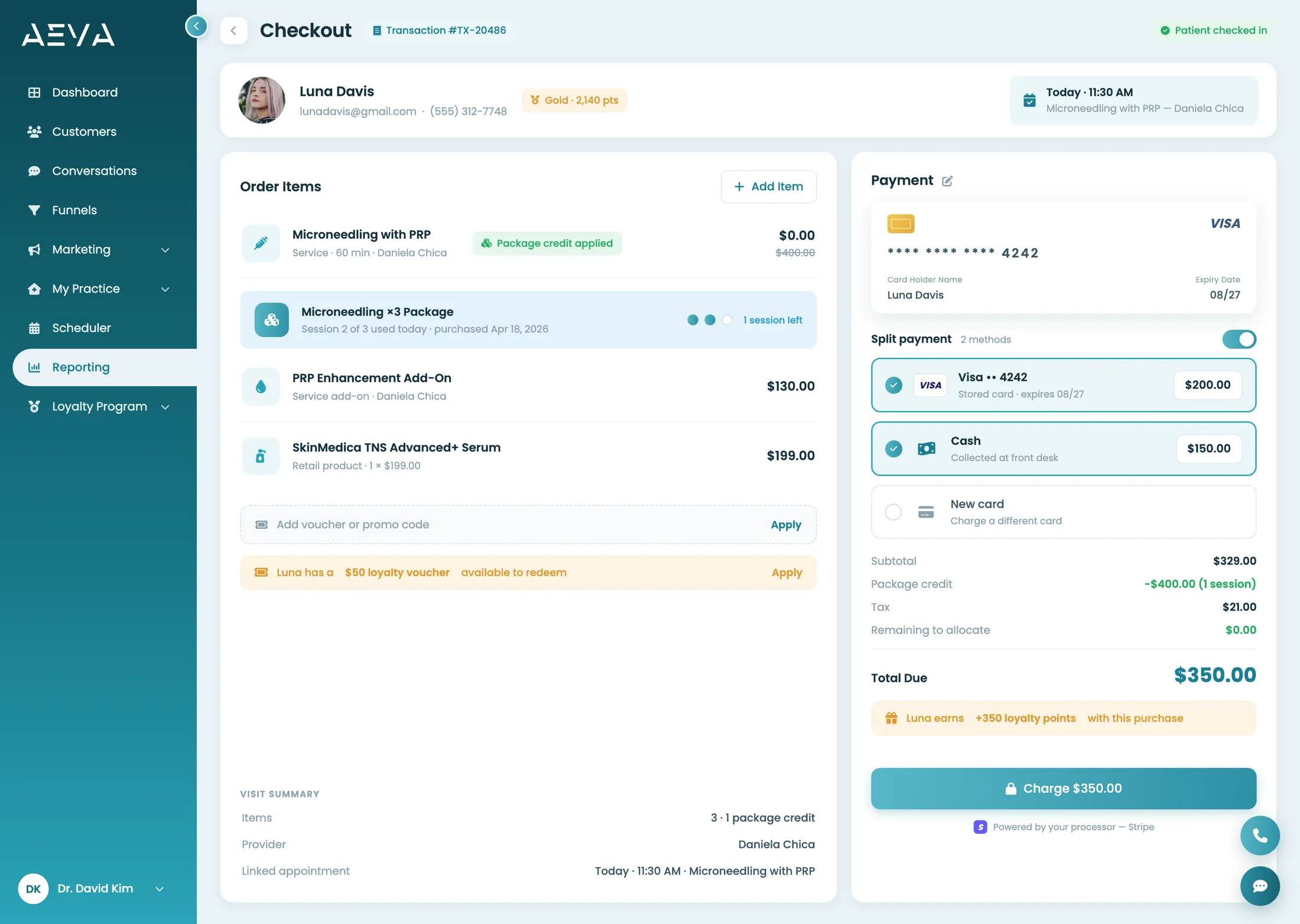
AEVA's med spa point of sale makes checkout part of the patient's profile. Pay with a card on file, cash, or both, with an in-person terminal for card-present checkout, and every sale, package, membership, and loyalty reward posts to that profile the moment it happens.

How it works
Checkout that posts to the patient's account.
Checkout ties to the visit, so packages get consumed by the appointments that use them and every sale lands on the patient's account. Memberships and loyalty live in the same checkout instead of in separate tools. Patients subscribe, earn points, and redeem rewards themselves from the app, and the practice sees all of it on one profile.
-
Checkout tied to the visit
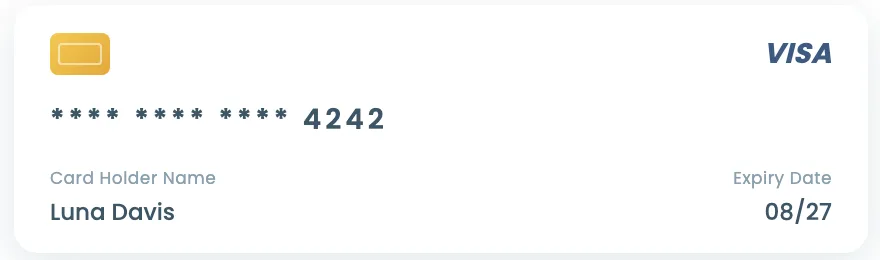
Pay with a card on file, cash, or both, with an in-person terminal for card-present checkout. Every sale posts to the patient's profile.
-
Memberships that recur
Custom plans at any price and cadence, with monthly benefits that attach on their own. Patients can self-subscribe from the app.
-
Loyalty that brings them back
Point tiers and a voucher catalog. Patients see their balance and redeem rewards themselves, in the app and the web portal.
-
Bring your own processor
Keep your own payment integration and your own rates, with no lock-in. Every transaction still feeds reporting and attribution.
Packages consume themselves
Attach a package to an appointment and its credits are consumed by the visits that use them, tied to the specific completed appointment. The front desk never tallies sessions in a side spreadsheet, and when a patient asks what is left on their package, the answer comes from the patient's profile instead of from memory.
The contact card is the ledger
Every sale lands on the patient's contact card with the full transaction history and per-transaction drill-down. The contact card always knows what a patient is worth to the practice: lifetime spend, month-to-date spend, purchase count, and last payment sit on the same profile the front desk books and charts on.
Offers close in the app
Push a limited-time offer to the whole patient base or a targeted segment, and patients buy it in a couple of taps from the notification. The purchase lands on their account with the credit, package, or voucher applied and ready to redeem at the next visit, with no manual entry by your team.
Step by step
The life of a checkout.
Follow one visit from the treatment room to the revenue report. Each step happens in the same place, so nothing is re-keyed between systems and nothing about the sale gets lost on the way from the front desk to the books.
-
The visit wraps
Checkout opens tied to the appointment and the patient, already knowing the packages, membership benefits, and loyalty points that apply.
-
Payment is taken
The patient pays with a card on file, cash, or a split across both, or taps the in-person terminal for card-present checkout.
-
The sale posts
The transaction lands on the contact card, package credits are consumed by the visit, and loyalty points accrue on their own.
-
Revenue reports
The sale feeds monthly revenue, first-time-payer conversions, and the attribution that shows which campaign earned the visit.
The difference
One system or a stack of five.
A med spa can assemble checkout from a standalone point of sale, a membership tool, a loyalty app, and a spreadsheet for package credits. Each piece works on its own. What breaks is the handoff between them, where a sale, a used credit, or a redeemed reward gets re-keyed by hand or missed.
| What you are comparing | On the AEVA record | A bolted-on stack |
|---|---|---|
| Where a sale lives | On the patient record, with the visit that earned it | In a separate POS report, reconciled by hand |
| Package credits | Consumed by the specific completed appointments | Tallied in a spreadsheet or a second system |
| Membership benefits | Attach on their own each month, at any price and cadence | Applied manually at the desk, when someone remembers |
| Loyalty rewards | Patients see points and redeem vouchers in the app | Punch cards and front-desk lookups |
| Marketing attribution | Every transaction ties back to the campaign that earned it | Revenue guessed from ad-platform estimates |
| Your processor | Bring your own, with your own rates | Bundled processing with locked rates |
- Where a sale lives
- On the patient record, with the visit that earned it
- In a separate POS report, reconciled by hand
- Package credits
- Consumed by the specific completed appointments
- Tallied in a spreadsheet or a second system
- Membership benefits
- Attach on their own each month, at any price and cadence
- Applied manually at the desk, when someone remembers
- Loyalty rewards
- Patients see points and redeem vouchers in the app
- Punch cards and front-desk lookups
- Marketing attribution
- Every transaction ties back to the campaign that earned it
- Revenue guessed from ad-platform estimates
- Your processor
- Bring your own, with your own rates
- Bundled processing with locked rates
For how AEVA compares to a specific platform, see the compare pages.
Who it's for
Built for how cash-pay practices sell.
AEVA's point of sale is built for practices that sell care the way retail sells, in packages, series, memberships, and rewards. If revenue depends on patients coming back, the checkout has to carry the structures that bring them back, on the same profile as the visit.
Practices selling packages and series
Body sculpting series, laser packages, injectable plans. If your revenue arrives as multi-visit commitments, credits tied to real completed appointments are the difference between clean books and guesswork.
Practices building recurring revenue
Memberships at any price and cadence with benefits that attach on their own, and a loyalty ladder patients can see in the app. The tools that make monthly revenue predictable live in the same checkout.
Practices that run paid acquisition
When every transaction ties back to the campaign that earned it, ad spend gets judged on booked revenue instead of platform estimates. That is only possible because checkout and marketing run on the same profile.
If your revenue is primarily insurance-billed, AEVA's point of sale is built around cash-pay today. Medical billing is expected late 2026.
On one system
Revenue you measure, not guess.
Because the point of sale lives inside the platform, every transaction ties back to the campaign that earned it, so the practice measures growth against booked revenue instead of estimating. You keep your own payment processor and your own rates, with no lock-in, and every sale still feeds reporting and ad attribution.
$0 to $2M in 18 months
Grown on AEVA from first campaign to booked revenue, measured through the same profile checkout posts to. Read the Elite Beauty story
Payments are one part of the platform that runs the whole practice. See the full platform.
Frequently asked
What practices ask about payments.
Common questions about the AEVA point of sale: which processors you can keep, what payment methods checkout takes, how package credits get consumed, how memberships and loyalty run, and how a sale ties back to the campaign that earned the visit. If your question is not here, ask it on a demo.
Can I keep my own payment processor with AEVA?
Yes. AEVA is built bring-your-own-processor, so you keep your own payment integration and your own rates, with no lock-in. Practices commonly run Stripe or Square, and an in-person terminal handles card-present checkout at the desk. Every transaction still posts to the patient's profile and feeds reporting and attribution.
What payment methods does the AEVA point of sale support?
Checkout takes a card on file, cash, or a split across both, and an in-person terminal covers card-present payment. Because checkout is tied to the appointment, the packages, membership benefits, and loyalty points the patient already owns are all available at the moment of payment.
How do packages and credits work at checkout?
A package attaches to the patient, and its credits are consumed by the specific completed appointments that use them. The contact card shows what was bought, what has been used, and what remains, so neither the front desk nor the patient ever reconstructs a package from memory.
Can patients buy and manage memberships themselves?
Yes. Patients browse plans and self-subscribe from the patient app, where memberships auto-renew monthly and can be canceled anytime. The front desk can also enroll a patient directly with card capture. Plans run at any price and cadence, with monthly benefits that attach on their own.
How do patients redeem loyalty rewards?
Loyalty runs on point tiers and a voucher catalog, for example 1,000 points for a $100 voucher. Patients see their balance, their tier, and the catalog in the app and the web portal, and redeem rewards themselves without asking the front desk to look anything up.
Does the front desk have to enter purchases by hand?
No. Every sale posts to the patient's account the moment it happens, whether it comes from checkout at the desk, a pushed offer bought in the app, or a membership a patient starts themselves. Package credits consume, loyalty points accrue, and membership benefits attach without anyone keying them in.
How does checkout tie revenue back to marketing?
Every transaction ties back to the campaign that earned the visit, because checkout and marketing run on the same profile. The practice reads monthly revenue, first-time-payer conversions, and per-campaign return from real dollars instead of platform estimates. That loop is what lets ad spend be judged on booked revenue.
See checkout run on one system.
Bring the way your practice takes payment, sells packages, and runs memberships, and we will walk through how each sale posts to the patient's profile and ties back to the campaign that earned it, so you can see revenue measured instead of estimated.